Understanding MCP Servers: The Fundamentals for AI Applications (Explainer & Common Questions)
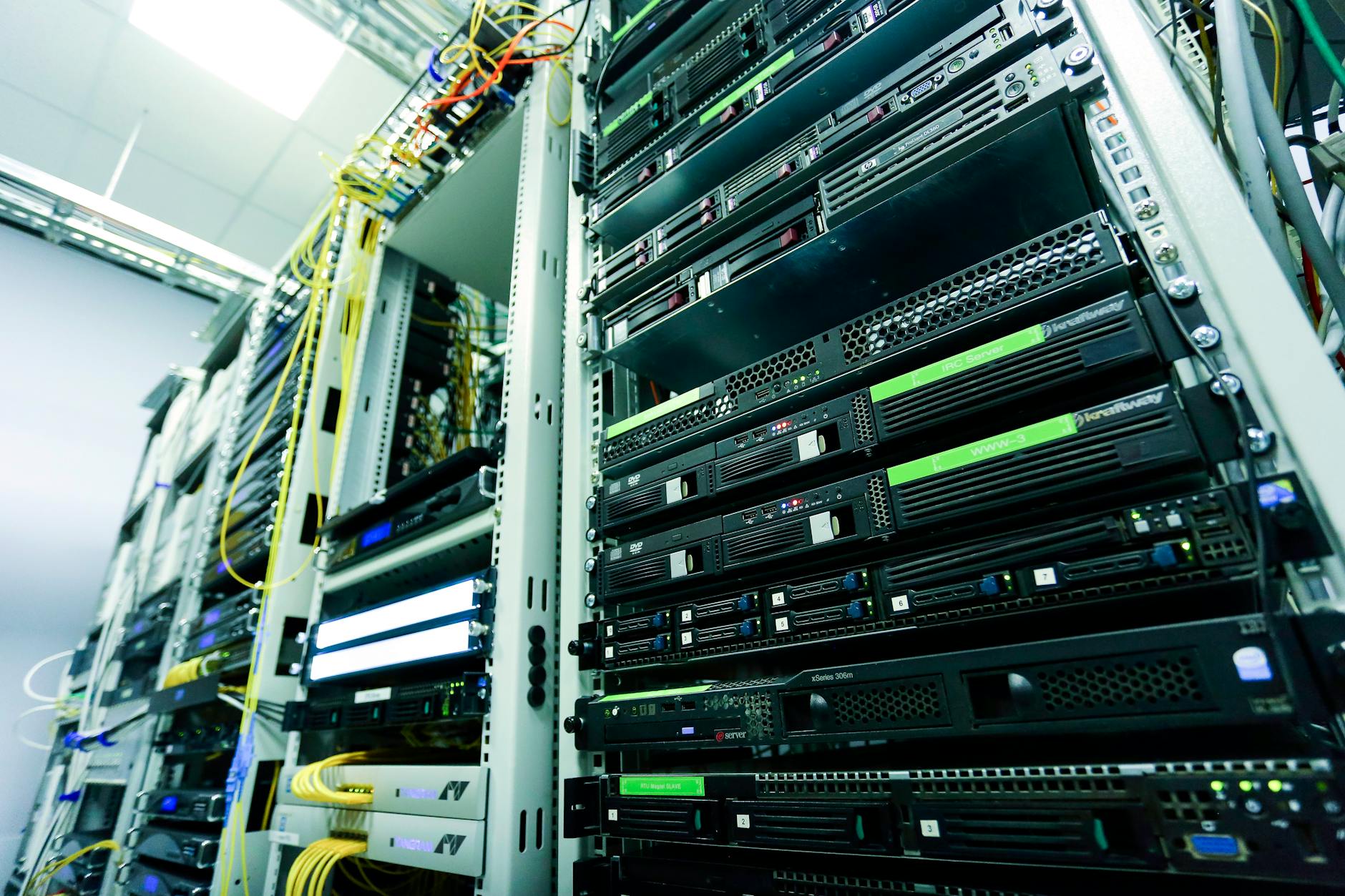
As artificial intelligence continues its rapid ascent, the demands on underlying infrastructure become increasingly complex. This is where MCP servers – or Massively Concurrent Processing servers – enter the scene as a fundamental building block. Unlike traditional servers optimized for sequential tasks, MCP servers are architected from the ground up to handle a colossal number of simultaneous operations. Imagine an AI model processing millions of data points, performing real-time inferences, or training on vast datasets; without the capacity for massive concurrency, these operations would become crippling bottlenecks. Understanding the fundamentals of MCP servers is crucial for anyone looking to deploy or manage AI applications efficiently, as they provide the parallel processing power essential for high-throughput, low-latency AI workloads.
The core concept behind MCP servers revolves around their ability to distribute and execute numerous tasks in parallel across multiple cores, processors, and often even multiple nodes. This is achieved through specialized hardware architectures and sophisticated software frameworks that manage resource allocation and task scheduling. Common questions often arise regarding their distinction from GPUs or traditional CPUs. While GPUs excel at specific parallel computations like matrix multiplications, MCP servers offer a broader, more general-purpose concurrency suitable for diverse AI application components, including data ingestion, model serving, and distributed training. Key characteristics often include:
- High core count: Maximizing the number of processing units.
- Optimized interconnects: Ensuring rapid data exchange between components.
- Robust memory subsystems: Handling large datasets efficiently.
In essence, MCP servers are the workhorses that enable AI systems to tackle problems of unprecedented scale and complexity by facilitating truly parallel execution.
The Yep API offers a powerful backlinks API, providing comprehensive data to analyze website authority and search engine optimization. It allows developers to programmatically access backlink profiles, enabling the creation of custom tools for competitive analysis, link building strategies, and ongoing SEO monitoring. This API simplifies the process of gathering crucial backlink data, which is essential for understanding and improving a website's online presence.
Leveraging MCP Servers: Practical Tips for Robust AI Agent Performance (Practical Tips & Common Questions)
To truly leverage your Multi-Core Processing (MCP) servers for optimal AI agent performance, practical configuration is key. It's not enough to simply have powerful hardware; you need to ensure your AI workloads are distributed and managed efficiently. Consider memory allocation strategies: excessive over-provisioning can lead to unnecessary paging, while insufficient allocation will bottleneck your agents. Implement robust monitoring tools to track CPU utilization, I/O operations, and inter-process communication. Frequently, performance issues stem from unexpected contention for shared resources. Regularly review your agent's resource demands against the MCP server's actual capabilities. Are you seeing spikes in latency? It might indicate a need to optimize your agent's code for parallel execution or rethink your data pipeline to reduce bottlenecks on shared storage.
Beyond initial setup, continuous optimization and understanding common pitfalls are crucial for maintaining robust AI agent performance on MCP servers. A frequently overlooked aspect is network latency between agents and data sources. Even with powerful local processing, if your agents are constantly waiting for data over a slow network, your overall performance will suffer. Another common question revolves around scaling: when should you add more cores versus more MCP servers? Generally, if your current server's cores are underutilized but processing is slow due to heavy single-threaded operations within an agent, optimizing the agent's code for multi-threading is a better first step. If all cores are consistently maxed out across multiple independent agents, then adding more servers might be the more effective solution. Don't forget the importance of containerization and orchestration tools like Kubernetes, which can greatly simplify the deployment and management of AI agents across multiple MCP instances, ensuring high availability and efficient resource utilization.